
Oops. It seems, this page no longer exists.
Even great pickers come up empty sometimes.
In the Shop
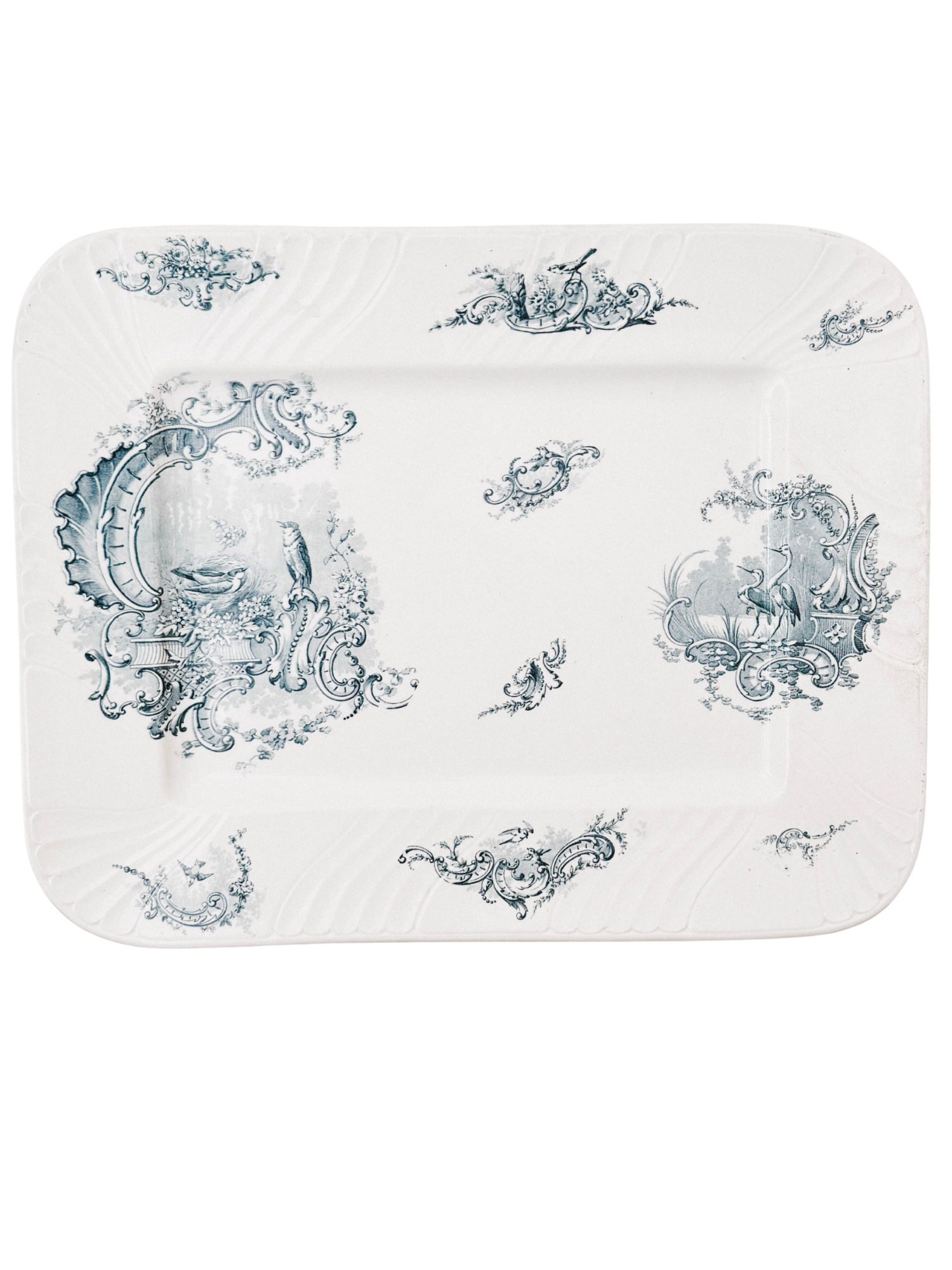
Era: Circa 1900
Origin: France
Material: Terre de Fer
Dimensions: 16.3” L × 13” W
DESCRIPTION
A beautiful antique French terre de fer serving platter from Lunéville, dating to around the turn of the 20th century and decorated in an elaborate blue Rocaille pattern.
The generously sized rectangular form features softly rounded corners and a wonderfully detailed transferware decoration of birds, foliage, scrolling cartouches, and ornamental flourishes. The deep blue imagery contrasts beautifully against the warm ivory ground, while subtle molded details around the border give the platter an additional layer of texture.
Marked on the reverse with a Lunéville factory backstamp, the piece is associated with the celebrated ceramic tradition of Lunéville in northeastern France. The mark appears consistent with Keller & Guérin production, though the attribution is based on the visible backstamp and available research.
Originally part of a French table service, its substantial scale makes it especially beautiful today as a serving piece or displayed upright on a shelf, console, or kitchen wall.
THE DETAILS
+Origin: France
+Period: Circa 1900
+Collection: La Cusine
+Material: Terre de Fer
+Dimensions: 16.3” L × 13” W
CONDITION
Very good antique condition with age-appropriate signs of use and wear. Subtle surface wear, light discoloration and variations to the glaze are present throughout, consistent with a piece dating to around the turn of the 20th century. These characteristics are part of its age and history.
Please refer closely to photographs for condition.
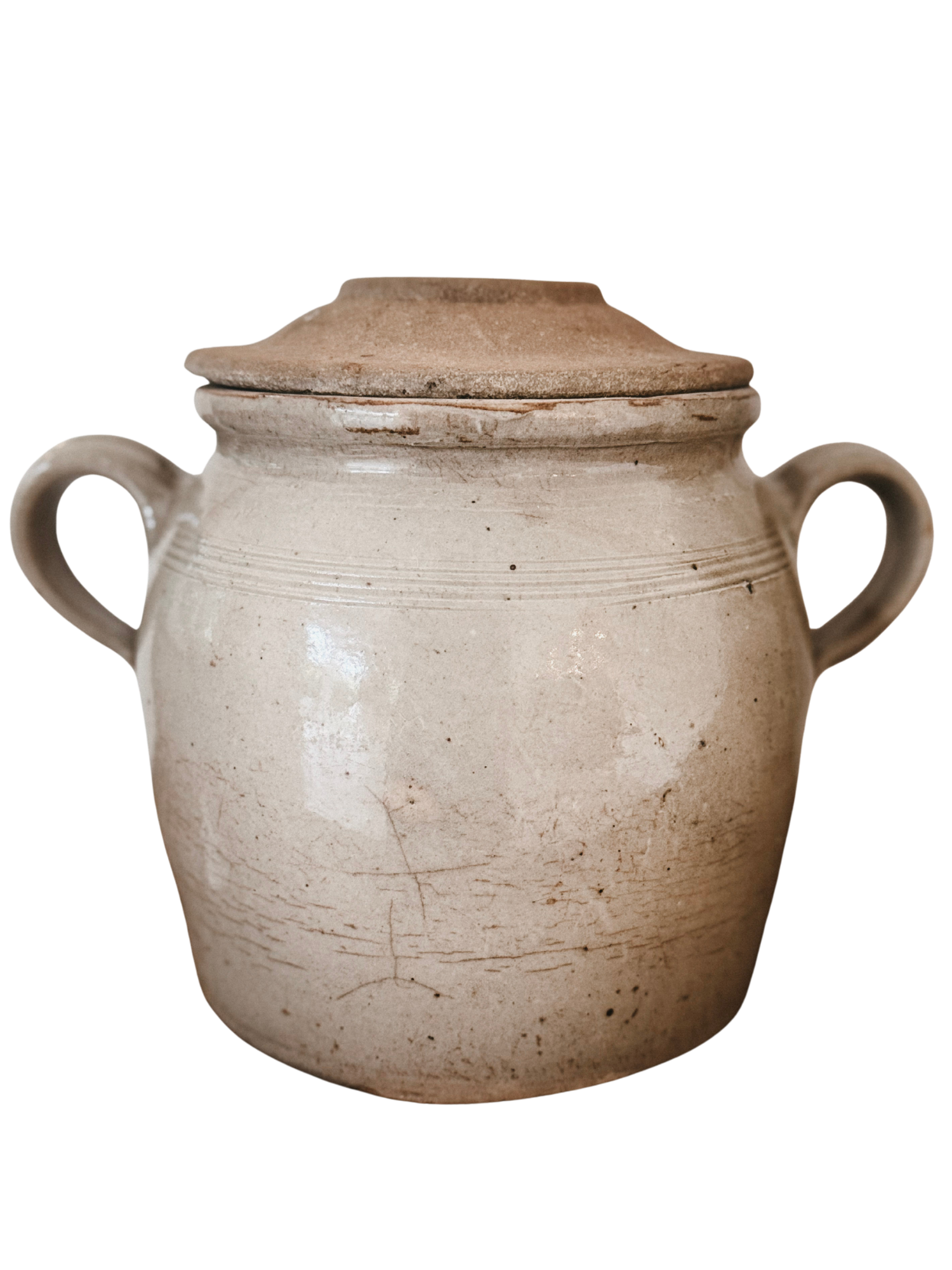
Era: Early to Mid 20th century
Origin: France
Material: Glazed Stoneware
Dimensions: 7” H × 6” Opening × 11” W (handle to handle) × 10” H with lid
DESCRIPTION
A beautifully timeworn French stoneware confit pot with its matching lid, finished in a warm creamy glaze and distinguished by decades of natural patina.
The rounded body features two generous loop handles, subtle incised banding around the shoulder, and an incised “Z 6” marking—a wonderful surviving detail of the vessel’s utilitarian past. The matching lid bears an impressed number “3.”
Traditionally, vessels of this form were used in French kitchens for preserving and storing foods. Today, its simple proportions, neutral coloring, and wonderfully aged surface make it a beautiful decorative piece for open kitchen shelving, a hutch, or a collected tabletop arrangement.
The softly aged glaze displays beautiful tonal variation, crazing, and patina throughout, giving the piece the warmth and character that only years of use can create. Its substantial size and original lid make it an especially charming addition to a collection of French country pottery.
THE DETAILS
+Origin: France
+Period: Early to Mid 20th century
+Collection: La Cuisine
+Material: Glazed Stoneware
+Dimensions: 7” H × 6” Opening × 11” W (handle to handle) × 10” H with lid
CONDITION
Good vintage condition with wear consistent with age and previous use. The glaze displays beautiful crazing, tonal variation, and surface patina throughout. There is a chip along the upper rim and a stable hairline at the rim near one of the handles. The lid is intact and bears an impressed number “3.”
Please refer to the photographs for a closer look at the condition and age-related character.
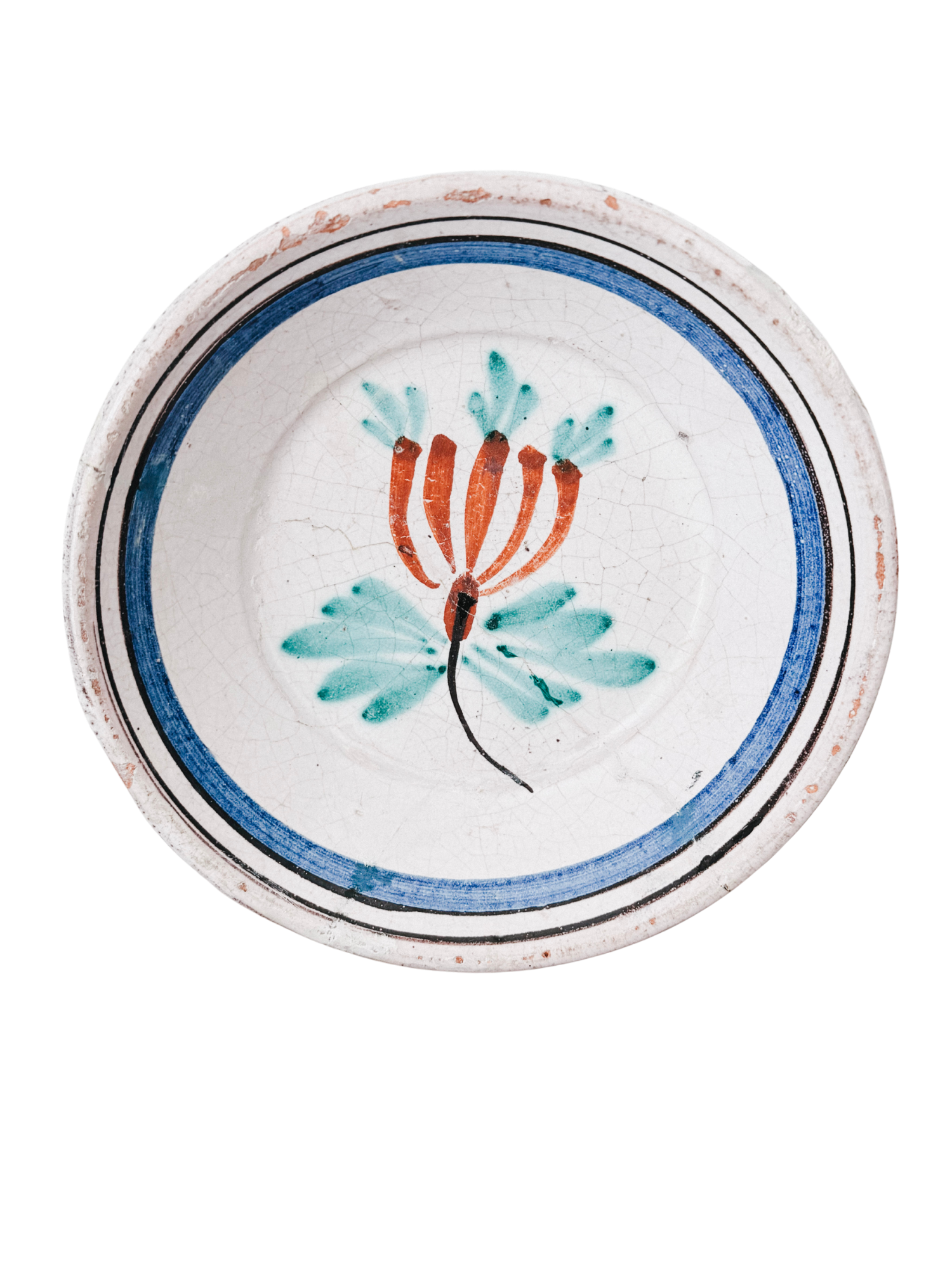
Era: Late 18th to Early 19th Century
Origin: France
Material: Tin-Glazed Earthenware (Faience)
Dimensions: 6.25” Ø × 2.25” H
DESCRIPTION
A beautifully timeworn French cul noir faience dish, distinguished by its richly glazed manganese reverse and delicate hand-painted blue decoration set against a traditional tin-glazed ground.
Cul noir, meaning “black bottom,” refers to the deep manganese glaze applied to the reverse of these wares—a distinctive characteristic found on French faience produced in several pottery centers during the eighteenth and early nineteenth centuries. Originally created for everyday use, pieces like this have become highly sought after for the warmth, authenticity, and history they bring to a collection.
This smaller example has aged beautifully over centuries of use. Its softly shaped form and hand-painted blue decoration are complemented by the surface variations and signs of wear that give antique faience its unmistakable character.
Today, it is equally compelling displayed on a wall, layered among collected plates and platters on open shelving, or styled atop a table or antique cabinet. Its smaller scale makes it especially lovely layered alongside other pieces of French faience.
THE DETAILS
+Origin: France
+Period: Late 18th to Early 19th Century
+Collection: La Cusine
+Material: Tin-Glazed Earthenware (Faience)
+Dimensions: 6.25” Ø × 2.25” H
CONDITION
Good antique condition consistent with age and use. Expected surface wear, glaze variation, staining, crazing, firing irregularities and imperfections are present throughout.
Please review all photographs closely as they form part of the description.
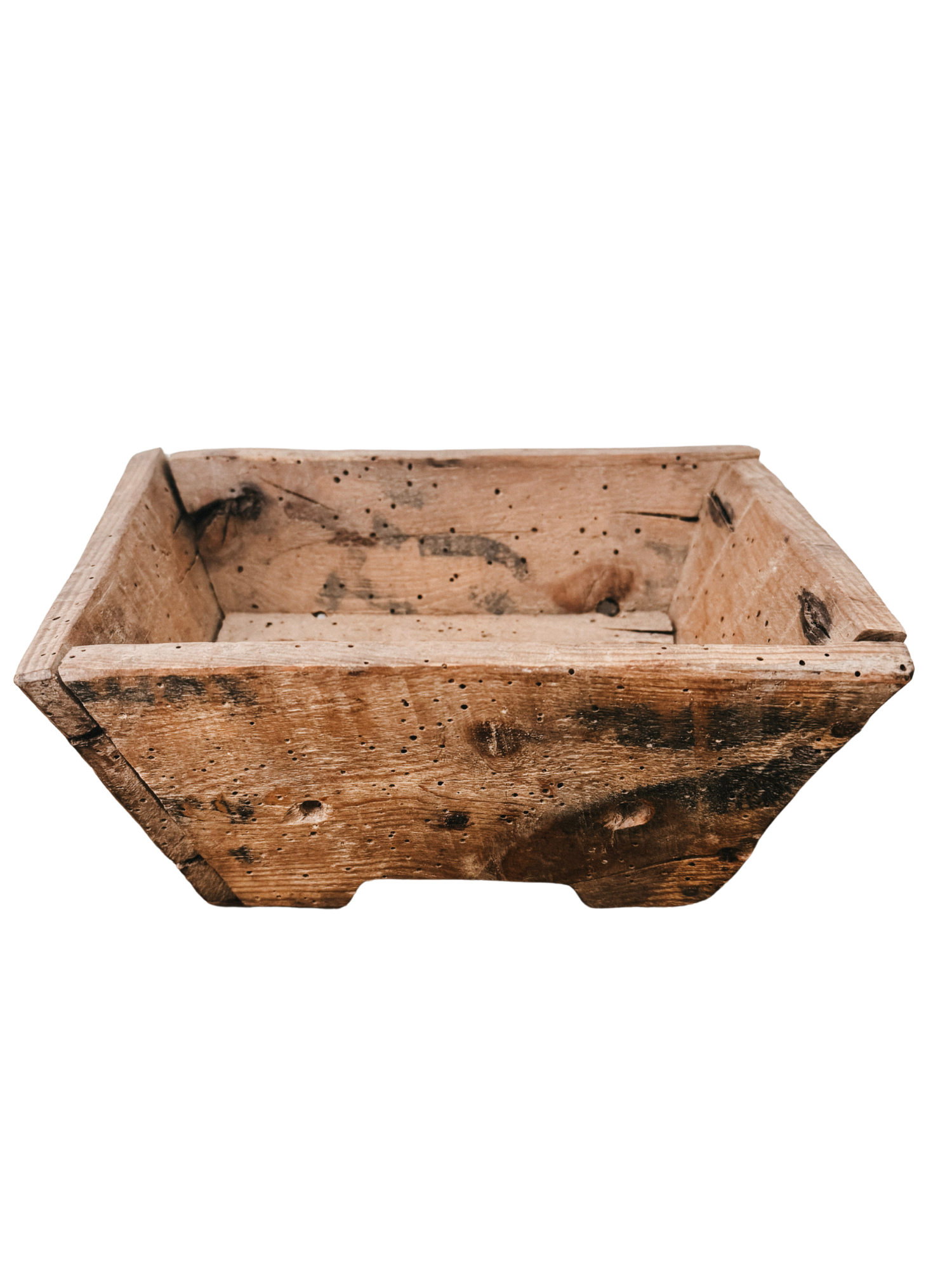
Era: Vintage, exact date unknown
Origin: France
Material: Wood
Dimensions: 7” L × 3.75” H
PRODUCT DESCRIPTION
A beautifully timeworn French wooden faisselle, traditionally used in cheesemaking to form cheese while allowing the whey to drain through its perforated construction.
Crafted from fitted wood panels, this rustic example retains the wonderful irregularities of an old utilitarian object—from the hand-drilled drainage holes to the warm, weathered surface and beautifully aged patina.
Once an everyday working piece of the French kitchen, it now has a wonderfully sculptural quality. Display it on open shelving, alongside collected pottery and kitchenware, or simply on its own as an evocative piece of French culinary history.
THE DETAILS
+Origin: France
+Period: Vinatge
+Collection: La Table
+Material: Wood
+Dimensions: 7” L × 3.75” H
CONDITION
Good vintage condition consistent with age and use. Expected surface wear, natural variation, wormholes, cracks, marks and imperfections are present throughout.
Please review all photographs closely as they form part of the description.
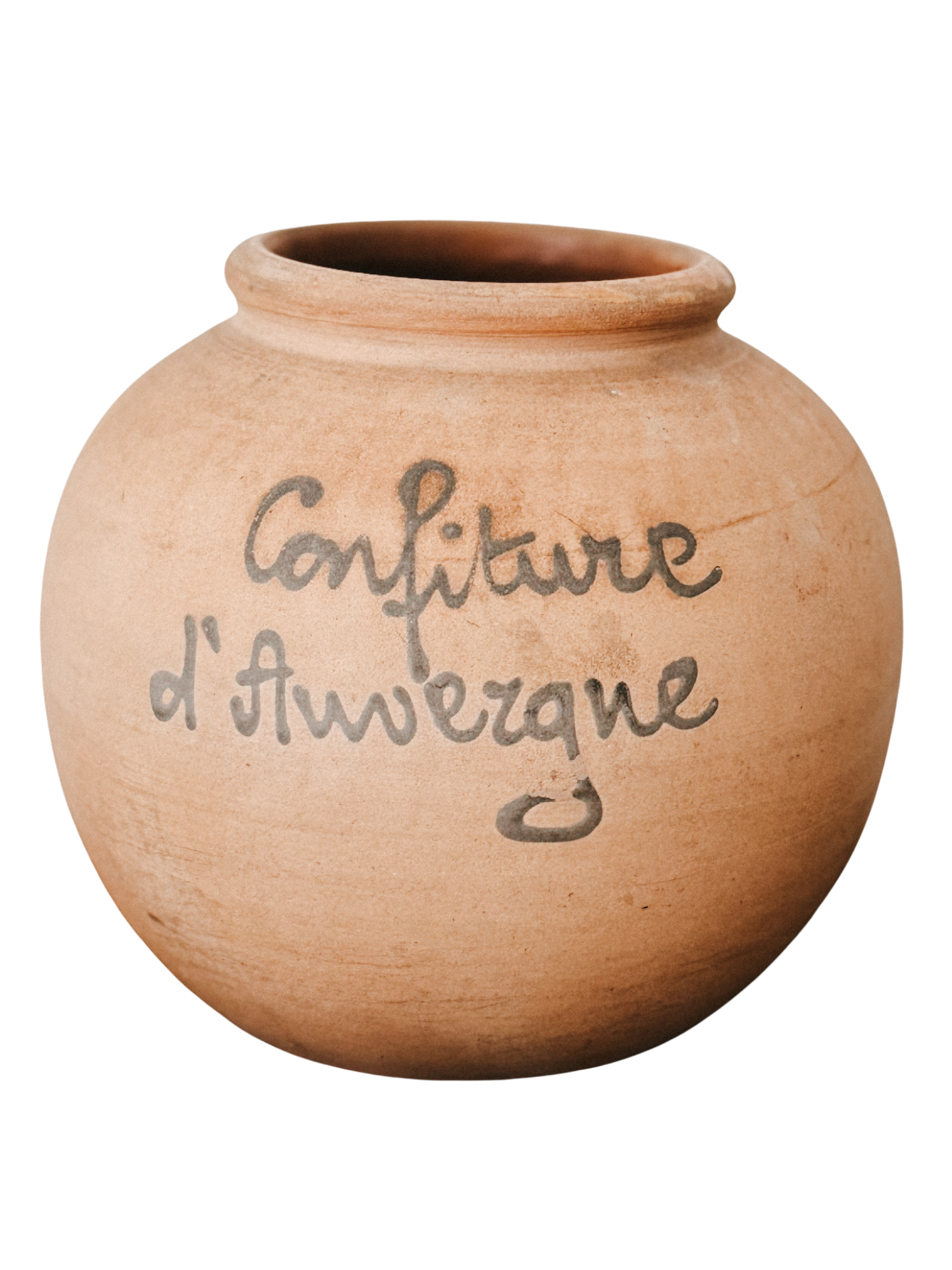
Era: Mid to late 20th century
Origin: France
Material: Terracotta / earthenware
Dimensions: 5.75” H × 3” Ø opening
DESCRIPTION
A charming vintage French terracotta preserve pot with a beautifully rounded form and hand-painted script reading “Confiture d’Auvergne,” with “Marquise de Sévigné” continuing around the vessel.
Originally made as a container for preserves from the Auvergne region of France, the pot has a wonderfully simple utilitarian form that has become especially decorative with age. The warm, softly weathered terracotta and charcoal-gray lettering give it the understated character of an old French kitchen piece.
Beautiful displayed on its own or grouped with antique French pottery, confit pots and other collected kitchen pieces.
THE DETAILS
+Origin: France
+Period: Mid to late 20th century
+Collection: La Cuisine
+Material: 5.75” H × 3” Ø opening
CONDITION
Vintage condition with surface wear, tonal variation, small marks and imperfections consistent with age and prior use. There is visible wear and discoloration around the rim and throughout the terracotta surface. Please review all photographs carefully as they form part of the description.
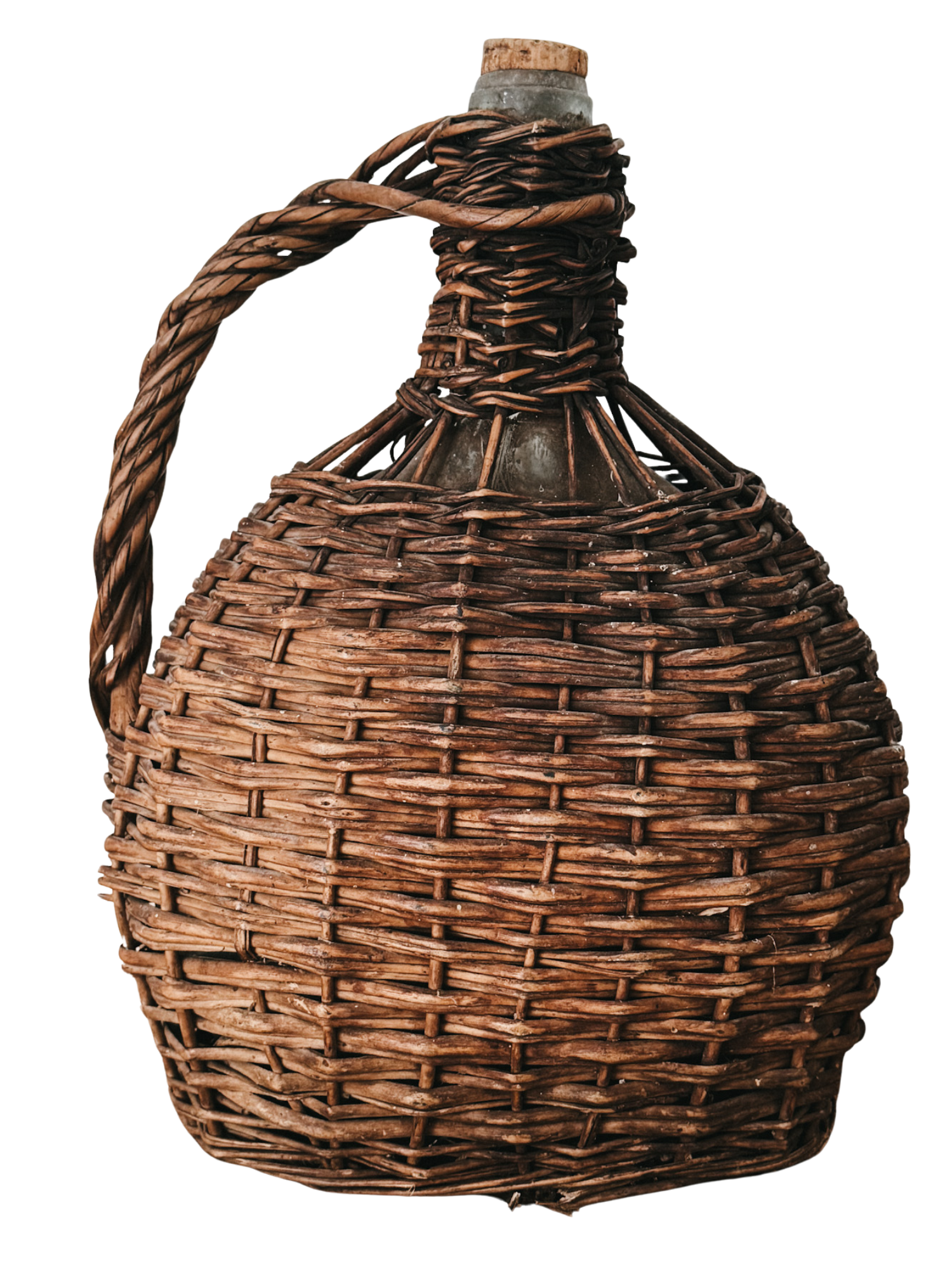
Era: Mid 20th century
Origin: France
Material: Handwoven Wicker & Glass
Dimensions: 11.5” H × 6.5” Ø base
DESCRIPTION
A beautifully preserved French wicker-covered demijohn dating to the mid-20th century, handwoven around a substantial glass vessel in the tradition of French wine and cider making.
Demijohns like this were once an essential part of everyday life throughout the French countryside, used to transport and store wine, cider, vinegar, and other household provisions. The woven wicker casing helped protect the glass during handling while adding strength and durability for practical everyday use.
This example is especially beautiful for its deep, darkened wicker and richly developed patina. The handwoven casing has wonderful tonal variation throughout, while the thick braided carrying handle adds another layer of texture and character. The glass remains visible around the shoulder and neck, where years of age and use have left a beautifully cloudy, timeworn surface. The vessel also retains its cork closure.
The contrast between the dark, aged wicker and weathered glass gives this piece a particularly sculptural presence. Whether displayed on its own, grouped with other antique vessels, or styled on a tabletop or open shelving, it brings warmth, texture, and a collected European feel to a space.
THE DETAILS
+Origin: France
+Period: Mid 20th century
+Collection: La Cuisine
+Material: Handwoven Wicker & Glass
+Dimensions: 11.5” H × 6.5” Ø base
CONDITION
Good vintage condition with age-appropriate wear consistent with decades of use. The wicker displays a beautifully developed patina throughout. One strand of wicker near the handle has become loose but remains present and does not detract from the overall stability or display of the piece. The original green glass bottle is securely housed within the woven casing. Please review all photos carefully, as they are considered part of the condition description.
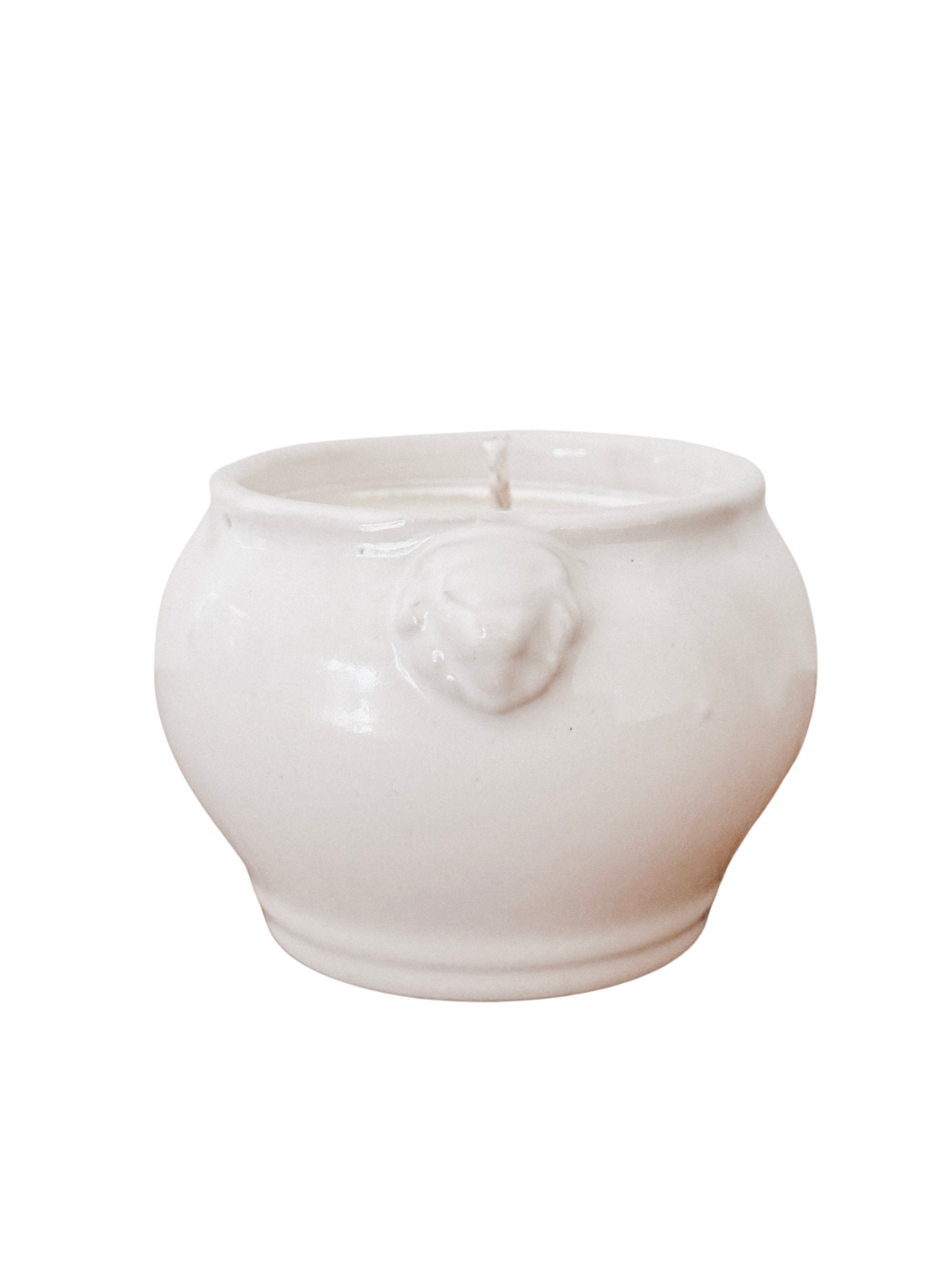
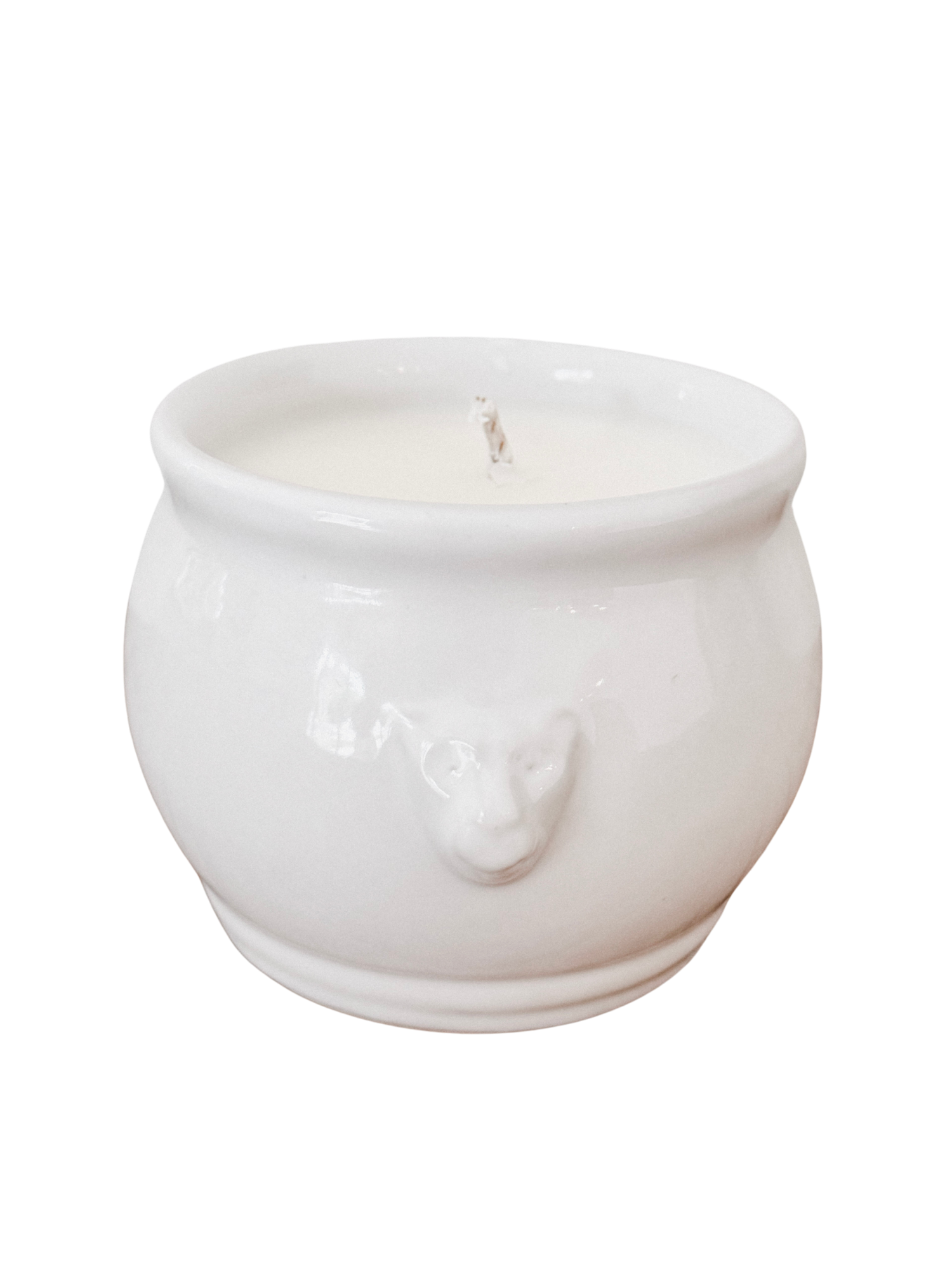
Era: Mid-20th Century
Origin: France
Material: French glazed earthenware
Dimensions: 2.75” H × 2.75” diameter
DESCRIPTION
An authentic French lion head vessel thoughtfully repurposed as part of the Lavande No. 1 candle collection. Once found in French homes as a functional serving piece, this vintage vessel has been given new life through a collaboration with Bleu Grace Homes.
Each candle is hand-poured in small batches and infused with Lavande No. 1—a calming blend of French lavender softened by warm tonka bean. The fragrance is fresh yet comforting, filling the home with notes of lavender, gentle woods, and subtle sweetness that linger long after the flame has been extinguished.
When the candle has finished burning, the vessel remains a beautiful keepsake—a piece of French history ready to be enjoyed for years to come. Whether styled in the kitchen, on a bedside table, or nestled into a bookshelf, it continues its story as an object collected with intention.
THE DETAILS
+Origin: France
+Period: Mid-20th Century
+Collection: Lavande No. 1
+Material: French glazed earthenware
+Dimensions:2.75” H × 2.75” diameter
CONDITION
Due to the vintage nature of the vessel, slight variations in glaze, patina, and finish are to be expected and are part of what makes each piece unique.
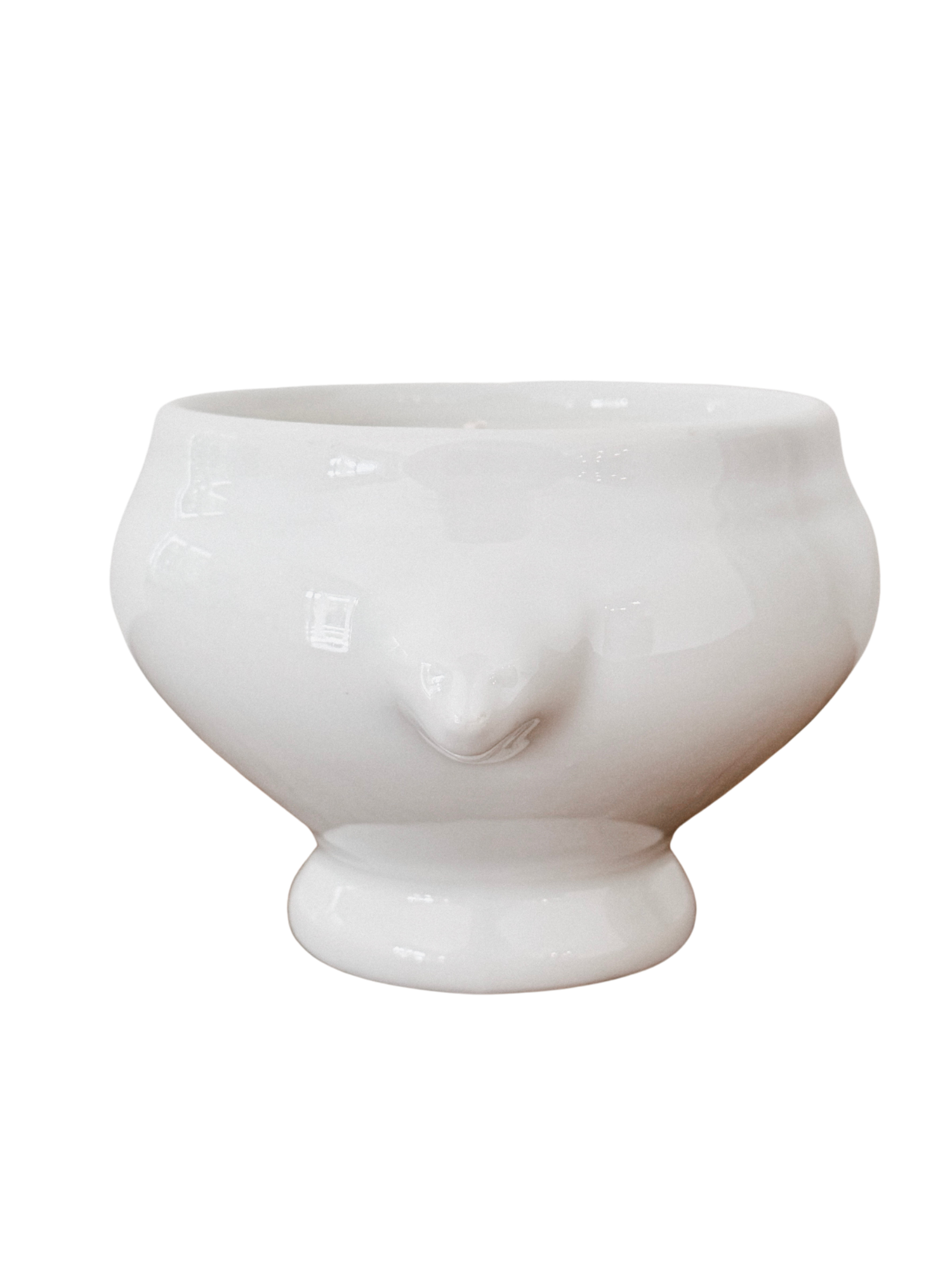
Era: Mid-20th Century
Origin: France
Material: French glazed earthenware
Dimensions: 3” H × 3” diameter
DESCRIPTION
An authentic French lion head vessel thoughtfully repurposed as part of the Lavande No. 1 candle collection. Once found in French homes as a functional serving piece, this vintage vessel has been given new life through a collaboration with Bleu Grace Homes.
Each candle is hand-poured in small batches and infused with Lavande No. 1—a calming blend of French lavender softened by warm tonka bean. The fragrance is fresh yet comforting, filling the home with notes of lavender, gentle woods, and subtle sweetness that linger long after the flame has been extinguished.
When the candle has finished burning, the vessel remains a beautiful keepsake—a piece of French history ready to be enjoyed for years to come. Whether styled in the kitchen, on a bedside table, or nestled into a bookshelf, it continues its story as an object collected with intention.
THE DETAILS
+Origin: France
+Period: Mid-20th Century
+Collection: Lavande No. 1
+Material: French glazed earthenware
+Dimensions:3” H × 3” diameter
CONDITION
Due to the vintage nature of the vessel, slight variations in glaze, patina, and finish are to be expected and are part of what makes each piece unique.
Era: Mid-20th Century
Origin: France
Material: French glazed earthenware
Dimensions: Approx 4–4.25” H × 4.25–5” diameter
DESCRIPTION
An authentic French lion head vessel thoughtfully repurposed as part of the Lavande No. 1 candle collection. Once found in French homes as a functional serving piece, this vintage vessel has been given new life through a collaboration with Bleu Grace Homes.
Each candle is hand-poured in small batches and infused with Lavande No. 1—a calming blend of French lavender softened by warm tonka bean. The fragrance is fresh yet comforting, filling the home with notes of lavender, gentle woods, and subtle sweetness that linger long after the flame has been extinguished.
When the candle has finished burning, the vessel remains a beautiful keepsake—a piece of French history ready to be enjoyed for years to come. Whether styled in the kitchen, on a bedside table, or nestled into a bookshelf, it continues its story as an object collected with intention.
THE DETAILS
+Origin: France
+Period: Mid-20th Century
+Collection: Lavande No. 1
+Material: French glazed earthenware
+Dimensions:: Approx 4–4.25” H × 4.25–5” diameter
CONDITION
Due to the vintage nature of the vessel, slight variations in glaze, patina, and finish are to be expected and are part of what makes each piece unique.
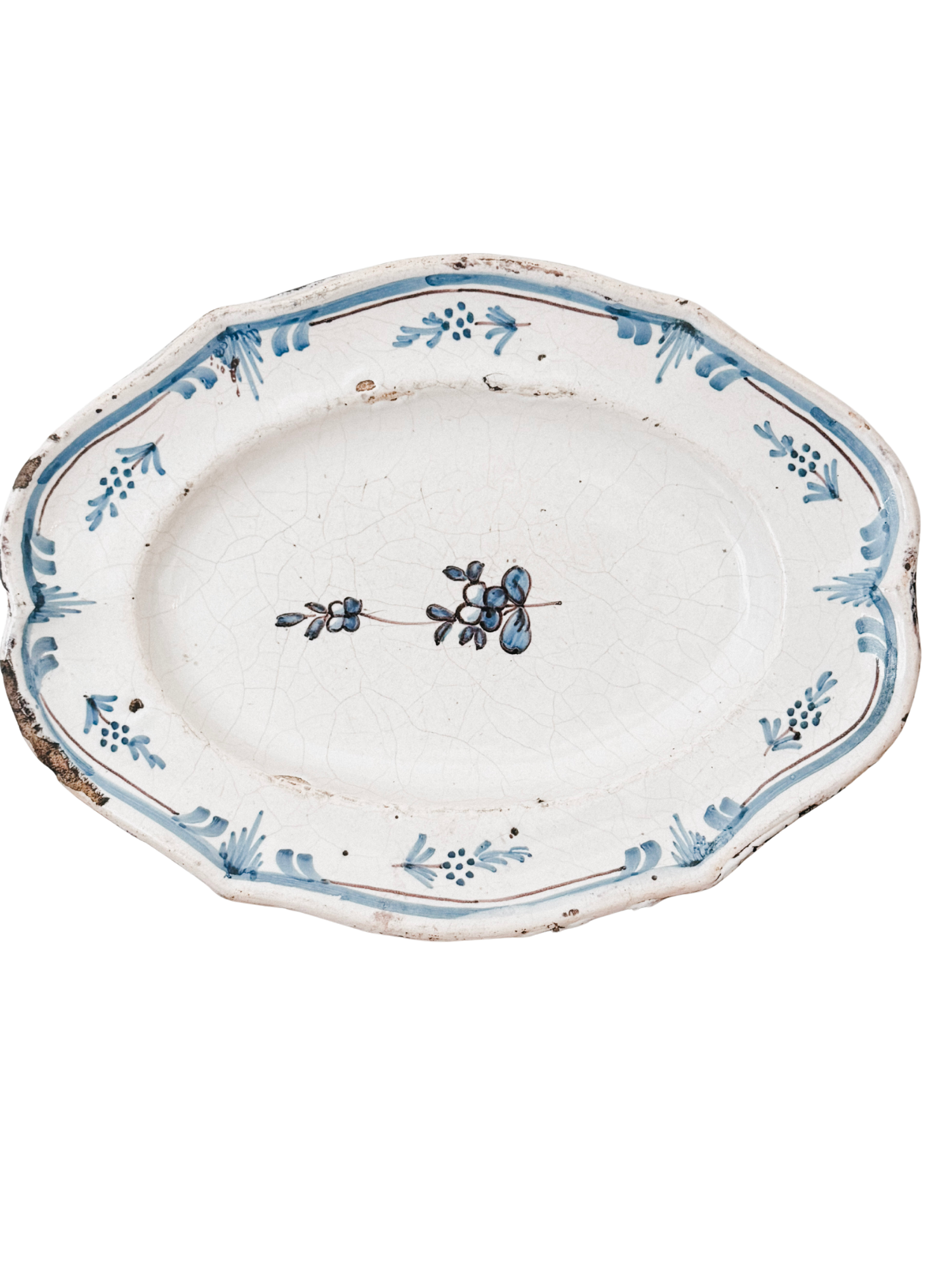
Era: Late 18th to Early 19th Century
Origin: France
Material: Tin-Glazed Earthenware (Faience)
Dimensions: 11” L × 8” W
DESCRIPTION
A beautifully timeworn French cul noir faience platter, distinguished by its richly glazed manganese reverse and delicate hand-painted blue floral decoration set against a traditional tin-glazed ground.
Cul noir, meaning “black bottom,” refers to the deep manganese glaze applied to the reverse of these wares—a distinctive characteristic found on French faience produced in several pottery centers during the eighteenth and early nineteenth centuries. Originally created for everyday use, pieces like this have become highly sought after for the warmth, authenticity, and history they bring to a collection.
This example has aged beautifully over centuries of use. The softly scalloped oval form is framed by a hand-painted blue border and central floral motif, while the surface displays extensive, honest crazing that speaks to its age and long life. The worn edges, glaze losses, and utensil marks tell the story of a piece that was once an active part of a French household.
Today, it is equally compelling displayed on a wall, layered on open shelving, or styled atop a dining table or antique cabinet. Its rich patina and unmistakable signs of age give it a presence that cannot be replicated.
THE DETAILS
+Origin: France
+Period: Late 18th to Early 19th Century
+Collection: La Vie Rassemblée
+Material: Tin-Glazed Earthenware (Faience)
+Dimensions: 11” L × 8” W
CONDITION
Fair to good antique condition with significant wear consistent with centuries of use. The platter exhibits extensive age-related crazing throughout the tin glaze, scattered glaze losses, rim fritting and edge wear, surface staining, and firing imperfections characteristic of early French faience. The manganese-glazed reverse also shows expected wear from age and handling. These imperfections are not defects but rather part of the platter’s history and contribute to its authenticity and character.
Please review all photographs carefully, as they are considered part of the condition description.
Era: Vintage
Origin: France
Material: Wood
Dimensions: 18” L × 16” H including handle
DESCRIPTION
A wonderfully rustic French wooden trug, sourced in France and beautifully marked by years of use. Its simple utilitarian form is made especially striking by the deep, darkened wood patina, worn surfaces, and traces of old red paint still visible along the front.
The tall bentwood handle and angular sides give the piece a sculptural quality, while the irregularities, old nails, weathering, and softened edges speak to its working past. The faint remnants of red paint are particularly charming—perhaps once part of an old marking or lettering, though its original purpose is unknown.
A beautiful piece displayed on its own or used to hold linens, dried branches, books, or other collected objects.
THE DETAILS
+Origin: Vintage
+Collection: Le Décor
+Material: Wood
+Dimensions: 18” L × 16” H including handle
CONDITION
Vintage condition with significant age-related wear and patina throughout, consistent with its utilitarian history. There is a visible split in the wood as photographed, as well as some separation along the wooden handle near the original nails. Both areas remain stable, and the trug is sturdy. Surface wear, discoloration, old nail holes, scratches, and irregularities are present throughout and contribute to the character of the piece.