Era: 19th / Early 20th Century
Origin: France
Material: Glazed earthenware (faïence)
Dimensions: 8″ diameter × 4″ H
DESCRIPTION
The first thing I noticed about this faisselle was the rim. The soft white glaze has worn away in places, letting the warm buff clay show through in little stretches all the way around the bowl. There’s similar wear at the foot, where the piece would have rested against a work surface. Turn it toward the light and the little drainage holes come into view, each slightly different from the next, with white glaze gathered around their edges.
In French kitchens and dairies, a faisselle was used to drain fresh cheese. The curds rested in the bowl while the whey slipped through the openings in the sides and base. I picture it set over a dish on a kitchen table, quietly doing its work while the rest of the day went on.
It’s the rim I keep coming back to. The warm clay against the white glaze gives this piece a softness I love. I’d keep it upright on an open shelf, where the light can come through the little holes and you can see the outline of the bowl, wear and all.
THE DETAILS
+Origin: France
+Period: 19th to early 20th century, estimated
+Collection: La Table
+Material: Glazed earthenware (faïence)
+Dimensions: 8″ diameter × 4″ H
CONDITION
Antique condition with pronounced wear around the rim, including visible chipping and glaze loss that expose the clay beneath. The footed base also shows wear and areas of exposed clay. The glaze has fine speckling and small surface irregularities throughout, and the drainage holes vary in size and shape.
These traces of age and use are part of the character and beauty of the piece. Please review all photographs closely, as they form part of the condition description.

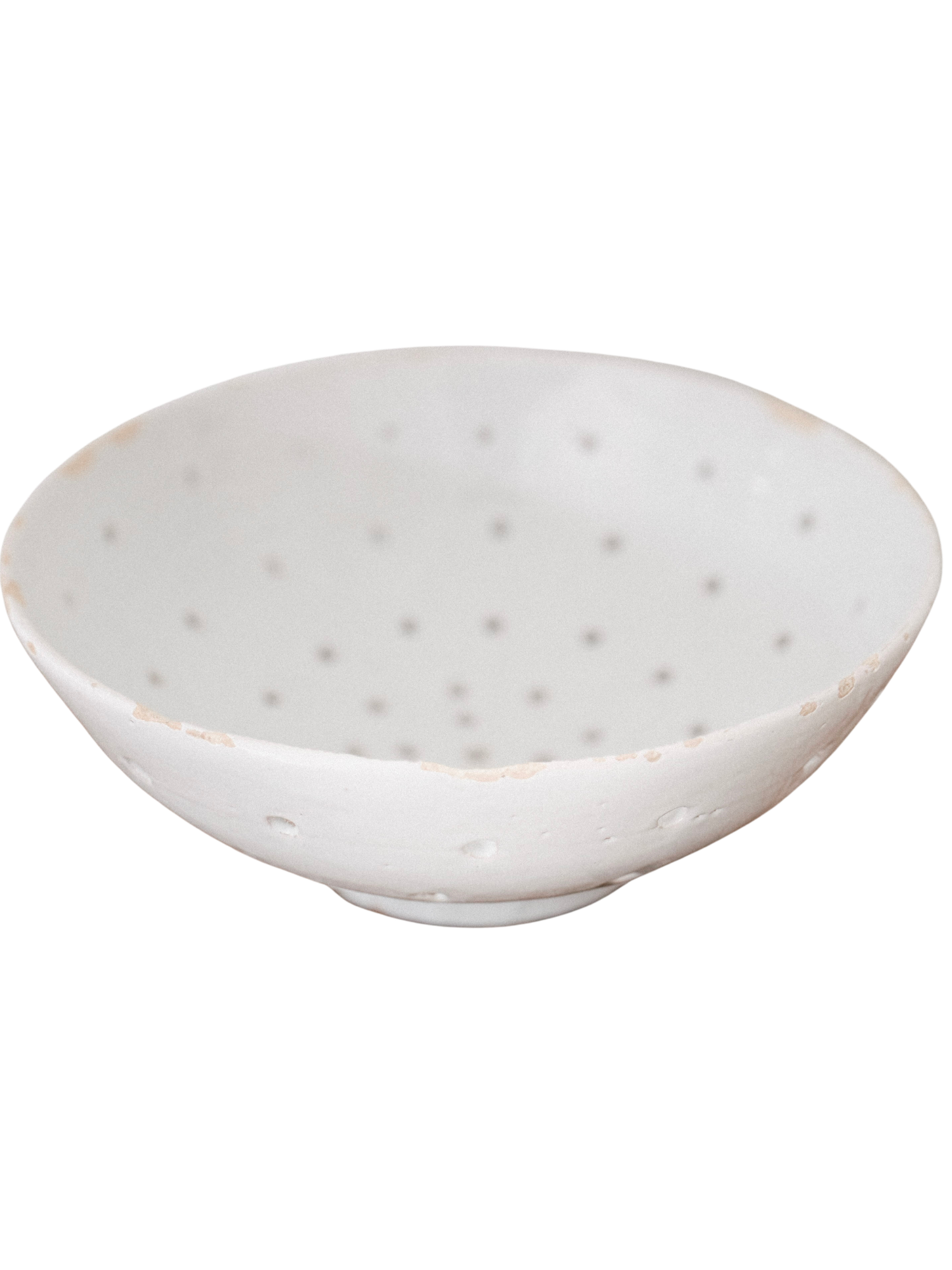 Image 1 of 4
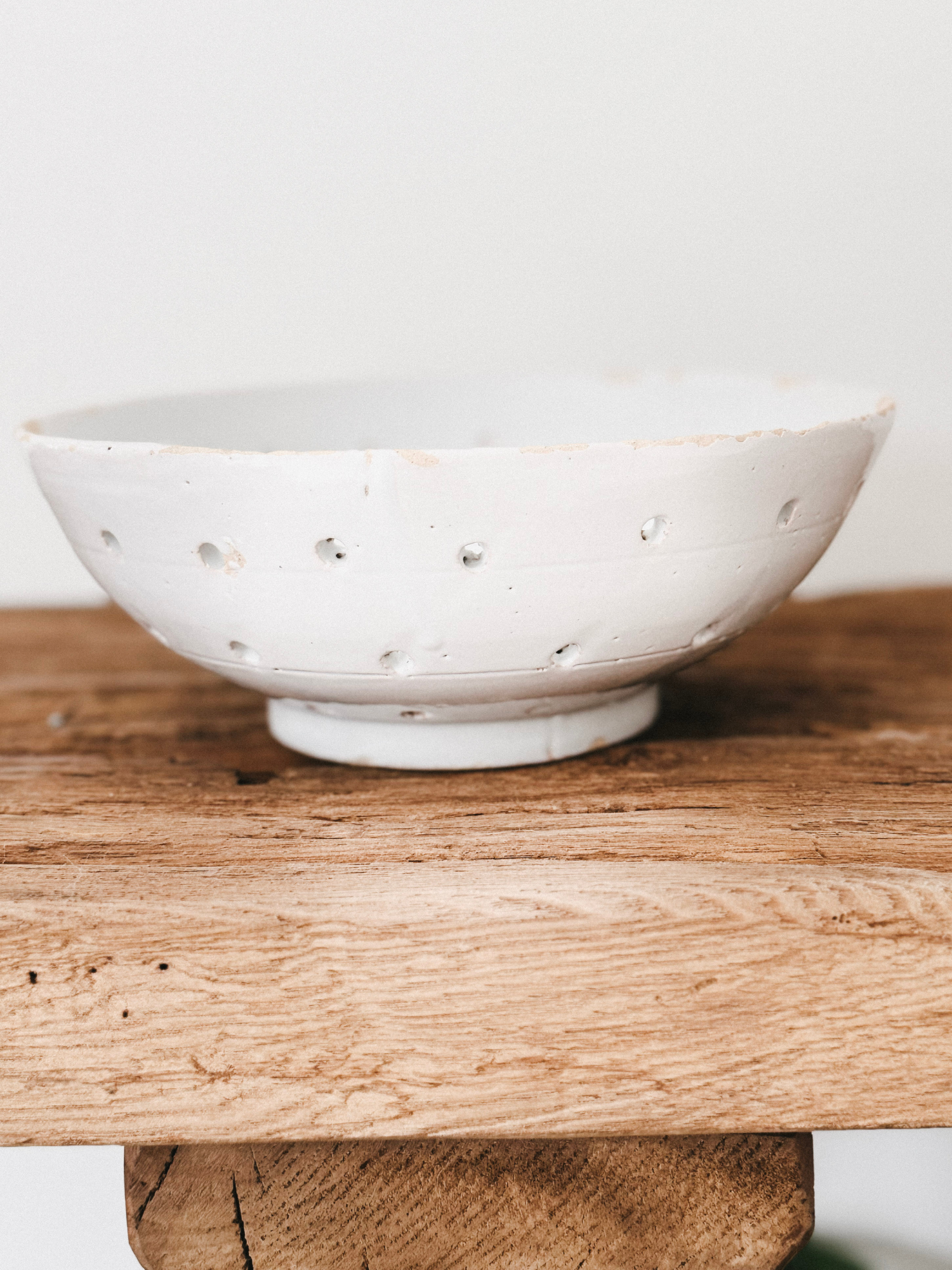 Image 2 of 4
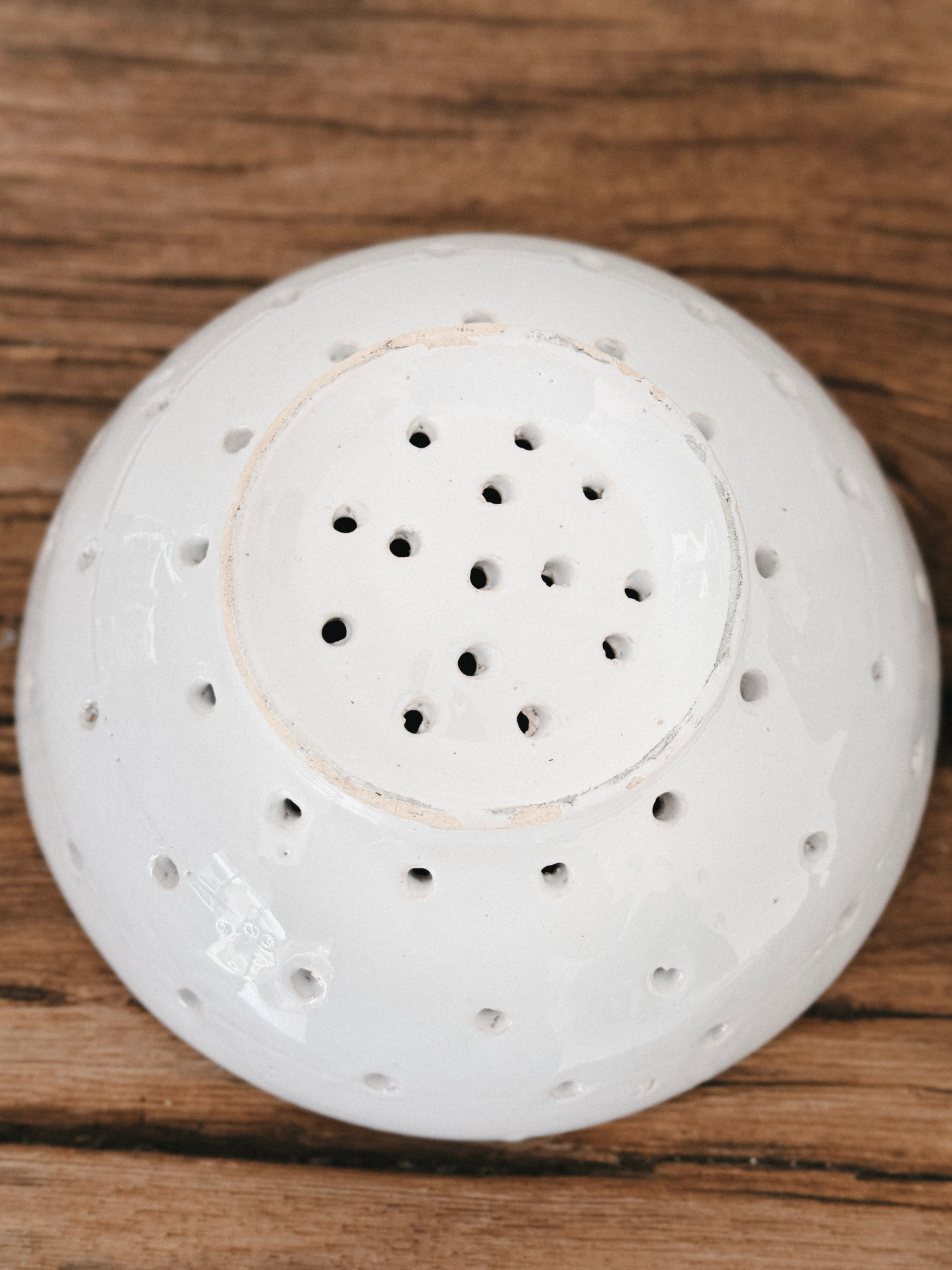 Image 3 of 4
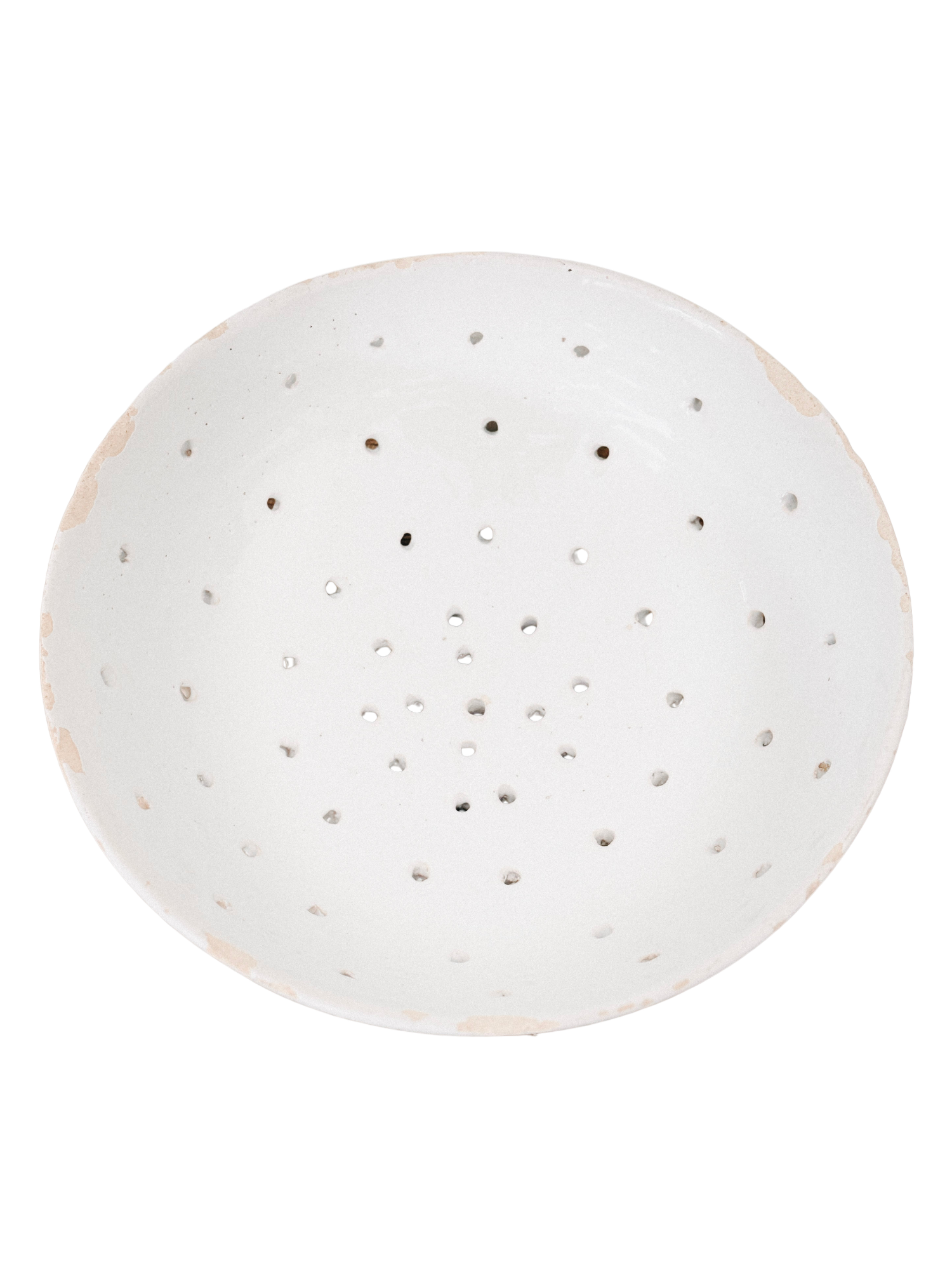 Image 4 of 4