Era: 19th Century
Origin: France
Material: Glazed earthenware (faïence)
Dimensions: 9¼″ H × 7¼″ D
DESCRIPTION
The white of this French confit pot has the softness of old linen. Fine dark flecks punctuate the tin glaze, and at the foot the white gives way to warm ochre clay. From across the room, it’s the rounded body and generous mouth that catch your eye. Up close, it’s the uneven edge of the glaze and the texture of the bare clay that make you want to pick it up and turn it over.
Attributed to the nineteenth century, this pot recalls the everyday pottery of southwestern France, where confit was a way to keep duck or goose for later. The cooked meat was packed into pots and covered with a layer of its own rendered fat. I picture a pot like this on a cool pantry shelf, within reach of the kitchen, waiting to be opened for another meal. There’s something especially lovely about that soft white glaze on a piece with such a practical purpose.
My favorite detail is the repair at the rim. Someone took the time to fill a chipped place, and you can still see where the pale fill meets the original glaze. It makes me wonder how long this pot had already been in someone’s kitchen when they decided it was worth mending. This was the piece I kept coming back to as I gathered The Poetry of Ordinary Things. If I were keeping one from the collection, it would be this one.
THE DETAILS
+Origin: France
+Period: 19th Century
+Collection: La Maison
+Material: Glazed earthenware (faïence)
+Dimensions: 9¼″ H × 7¼″ D
CONDITION
Antique condition with age-related wear and irregularities throughout. The glaze has fine speckling and small pinpricks. A visible cream-colored filled repair extends along part of the upper rim, with smaller nicks elsewhere along the edge. A small, round matte patch interrupts the glaze on the body. The foot shows chipping and glaze loss, and the unglazed underside has surface wear and a fine curved line.
These traces of age and use are part of the character and beauty of the piece. Please review all photographs closely, as they form part of the condition description.

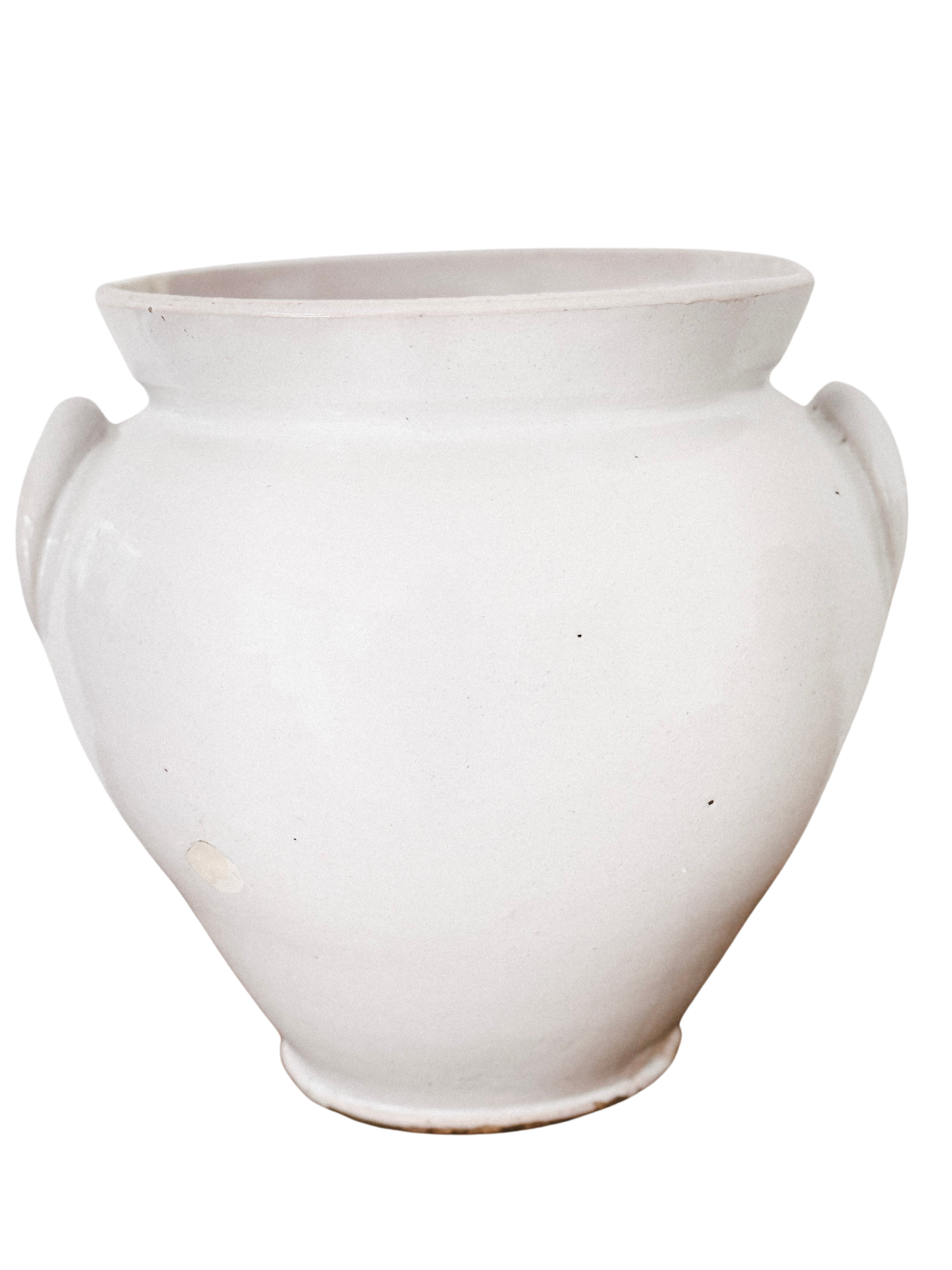 Image 1 of 5
 Image 2 of 5
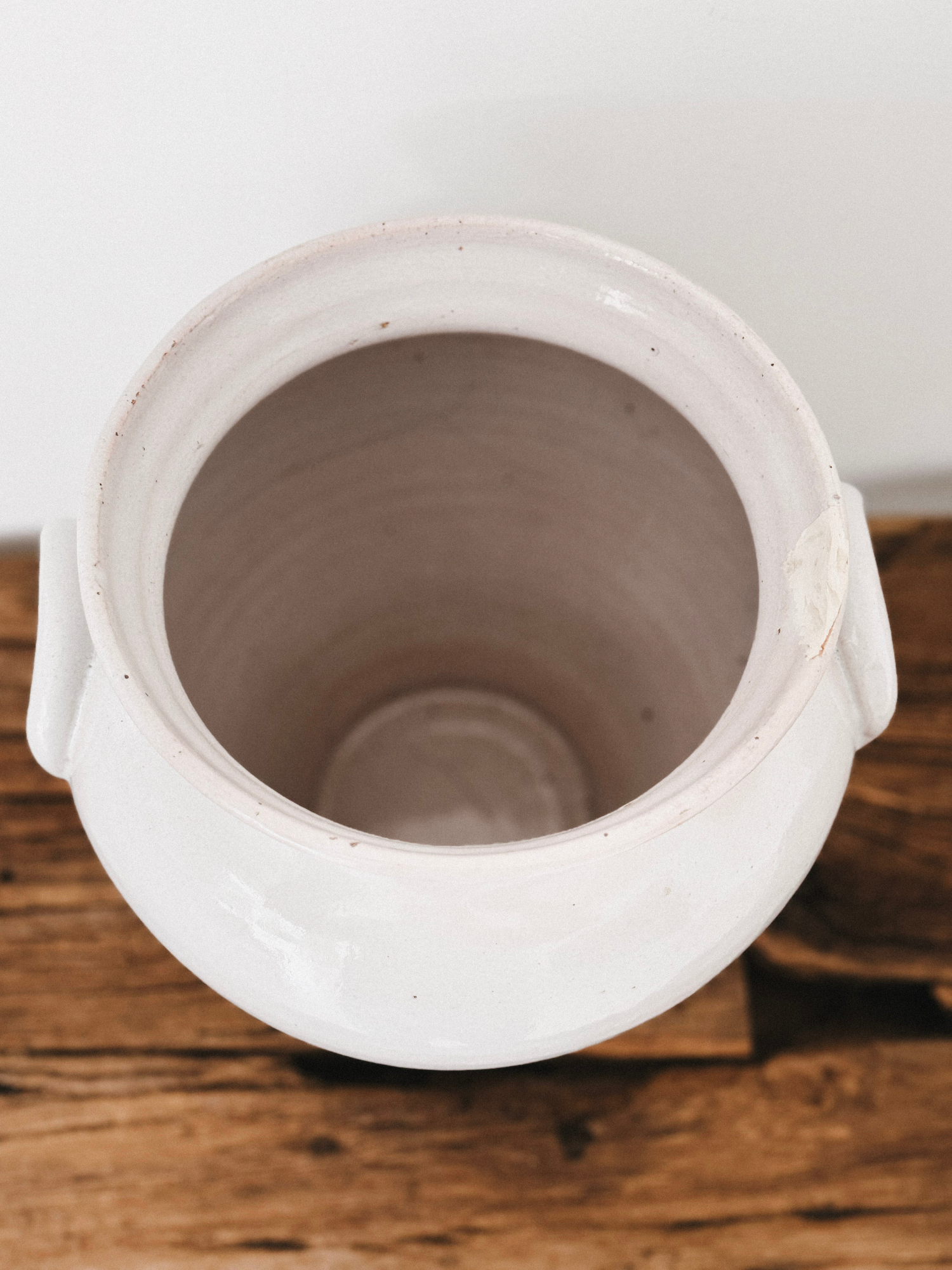 Image 3 of 5
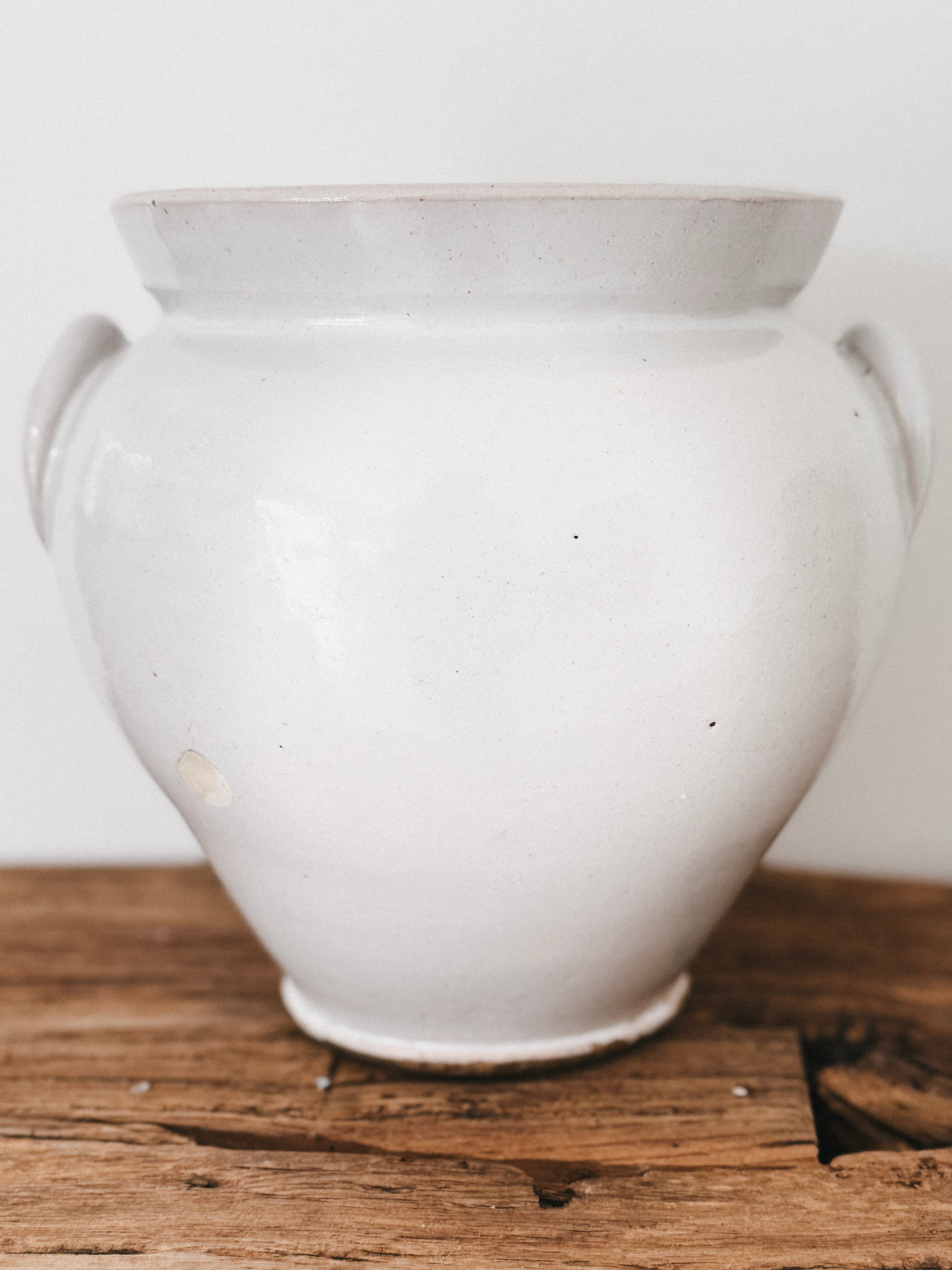 Image 4 of 5
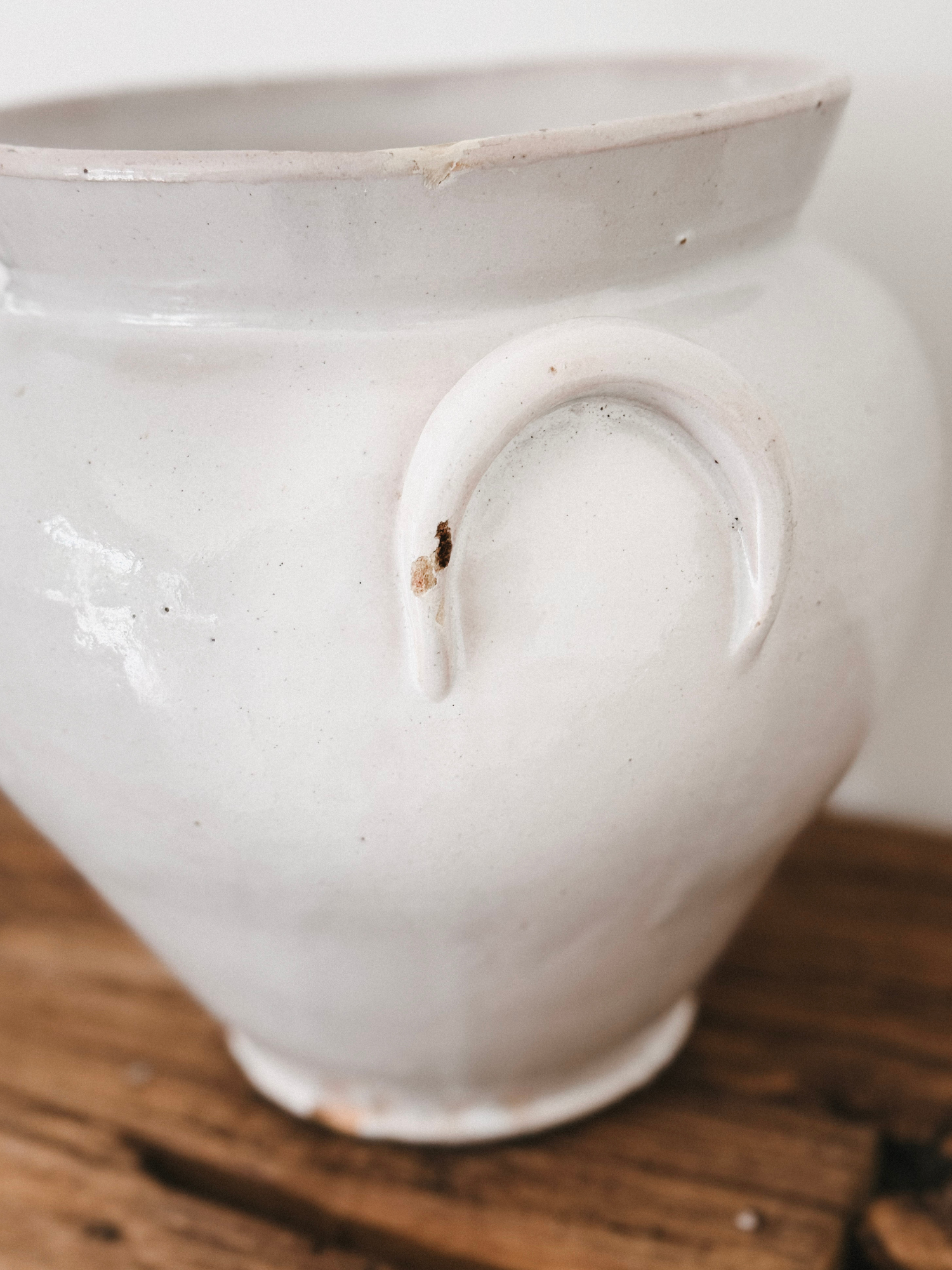 Image 5 of 5