Era: Late 18th to Early 19th Century
Origin: France
Material: Tin-Glazed Earthenware (Faience)
Dimensions: 11” L × 8” W
DESCRIPTION
A beautifully timeworn French cul noir faience platter, distinguished by its richly glazed manganese reverse and delicate hand-painted blue floral decoration set against a traditional tin-glazed ground.
Cul noir, meaning “black bottom,” refers to the deep manganese glaze applied to the reverse of these wares—a distinctive characteristic found on French faience produced in several pottery centers during the eighteenth and early nineteenth centuries. Originally created for everyday use, pieces like this have become highly sought after for the warmth, authenticity, and history they bring to a collection.
This example has aged beautifully over centuries of use. The softly scalloped oval form is framed by a hand-painted blue border and central floral motif, while the surface displays extensive, honest crazing that speaks to its age and long life. The worn edges, glaze losses, and utensil marks tell the story of a piece that was once an active part of a French household.
Today, it is equally compelling displayed on a wall, layered on open shelving, or styled atop a dining table or antique cabinet. Its rich patina and unmistakable signs of age give it a presence that cannot be replicated.
THE DETAILS
+Origin: France
+Period: Late 18th to Early 19th Century
+Collection: La Vie Rassemblée
+Material: Tin-Glazed Earthenware (Faience)
+Dimensions: 11” L × 8” W
CONDITION
Fair to good antique condition with significant wear consistent with centuries of use. The platter exhibits extensive age-related crazing throughout the tin glaze, scattered glaze losses, rim fritting and edge wear, surface staining, and firing imperfections characteristic of early French faience. The manganese-glazed reverse also shows expected wear from age and handling. These imperfections are not defects but rather part of the platter’s history and contribute to its authenticity and character.
Please review all photographs carefully, as they are considered part of the condition description.
Era: Late 18th to Early 19th Century
Origin: France
Material: Tin-Glazed Earthenware (Faience)
Dimensions: 11” L × 8” W
DESCRIPTION
A beautifully timeworn French cul noir faience platter, distinguished by its richly glazed manganese reverse and delicate hand-painted blue floral decoration set against a traditional tin-glazed ground.
Cul noir, meaning “black bottom,” refers to the deep manganese glaze applied to the reverse of these wares—a distinctive characteristic found on French faience produced in several pottery centers during the eighteenth and early nineteenth centuries. Originally created for everyday use, pieces like this have become highly sought after for the warmth, authenticity, and history they bring to a collection.
This example has aged beautifully over centuries of use. The softly scalloped oval form is framed by a hand-painted blue border and central floral motif, while the surface displays extensive, honest crazing that speaks to its age and long life. The worn edges, glaze losses, and utensil marks tell the story of a piece that was once an active part of a French household.
Today, it is equally compelling displayed on a wall, layered on open shelving, or styled atop a dining table or antique cabinet. Its rich patina and unmistakable signs of age give it a presence that cannot be replicated.
THE DETAILS
+Origin: France
+Period: Late 18th to Early 19th Century
+Collection: La Vie Rassemblée
+Material: Tin-Glazed Earthenware (Faience)
+Dimensions: 11” L × 8” W
CONDITION
Fair to good antique condition with significant wear consistent with centuries of use. The platter exhibits extensive age-related crazing throughout the tin glaze, scattered glaze losses, rim fritting and edge wear, surface staining, and firing imperfections characteristic of early French faience. The manganese-glazed reverse also shows expected wear from age and handling. These imperfections are not defects but rather part of the platter’s history and contribute to its authenticity and character.
Please review all photographs carefully, as they are considered part of the condition description.

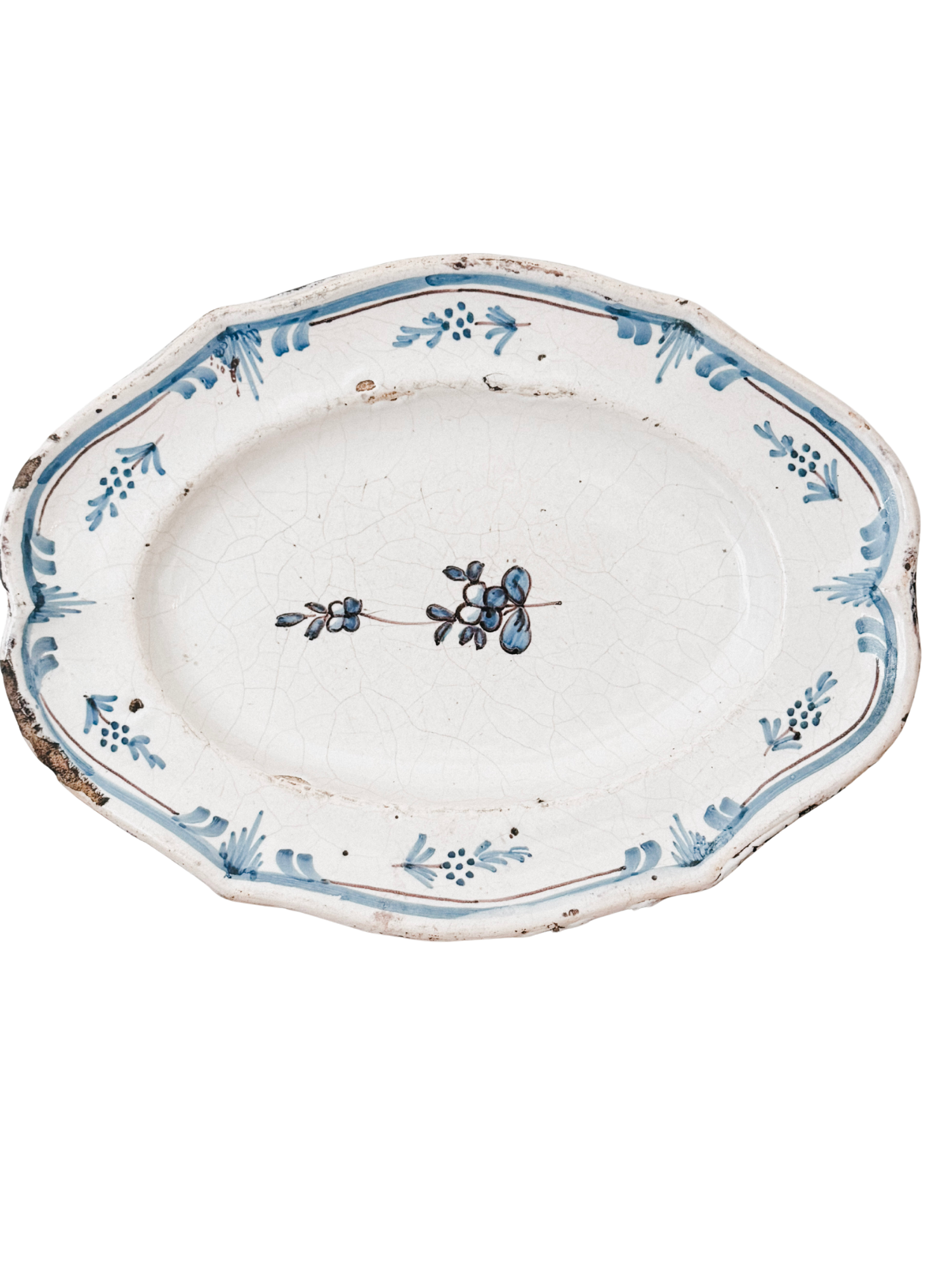 Image 1 of 4
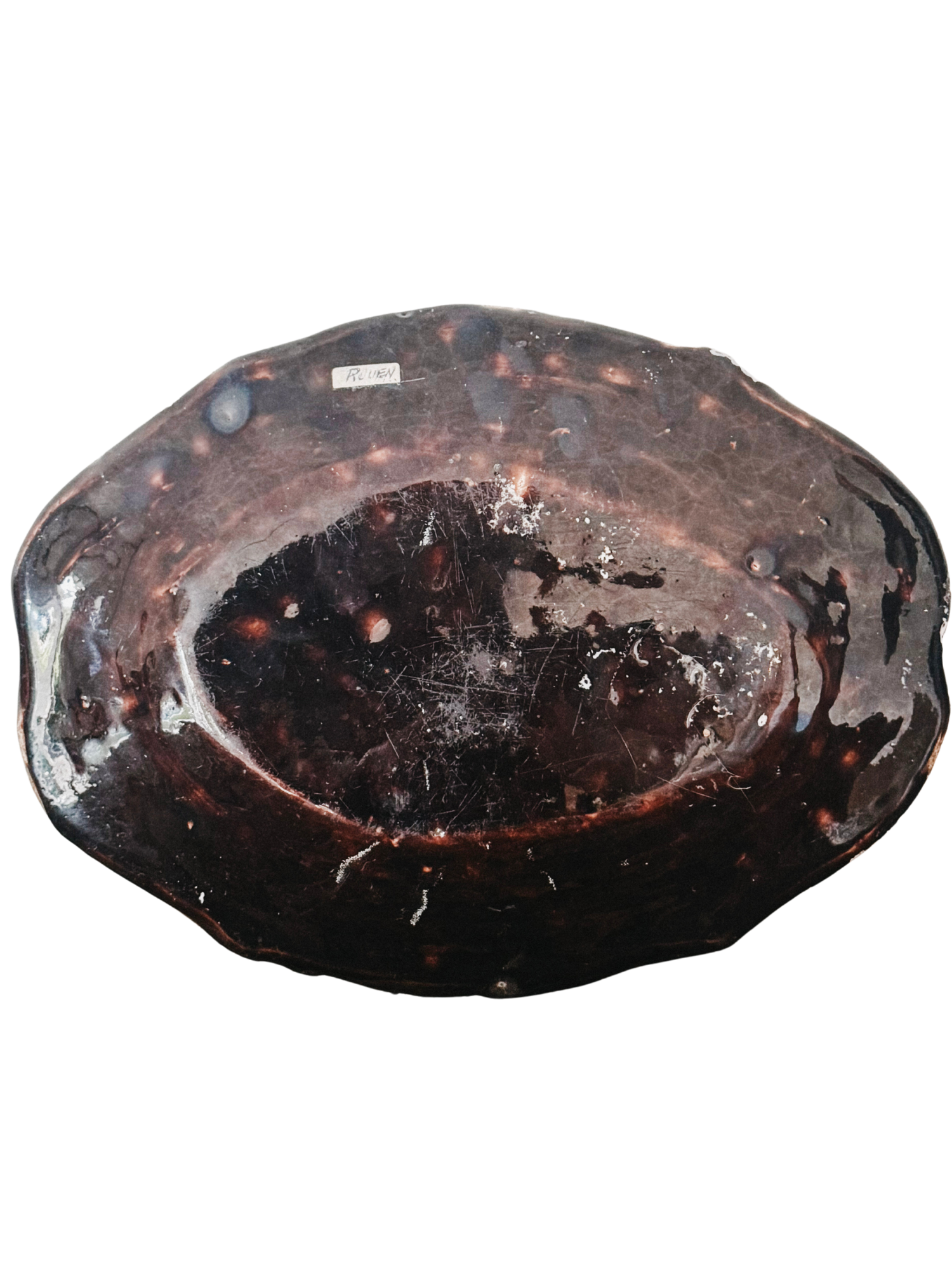 Image 2 of 4
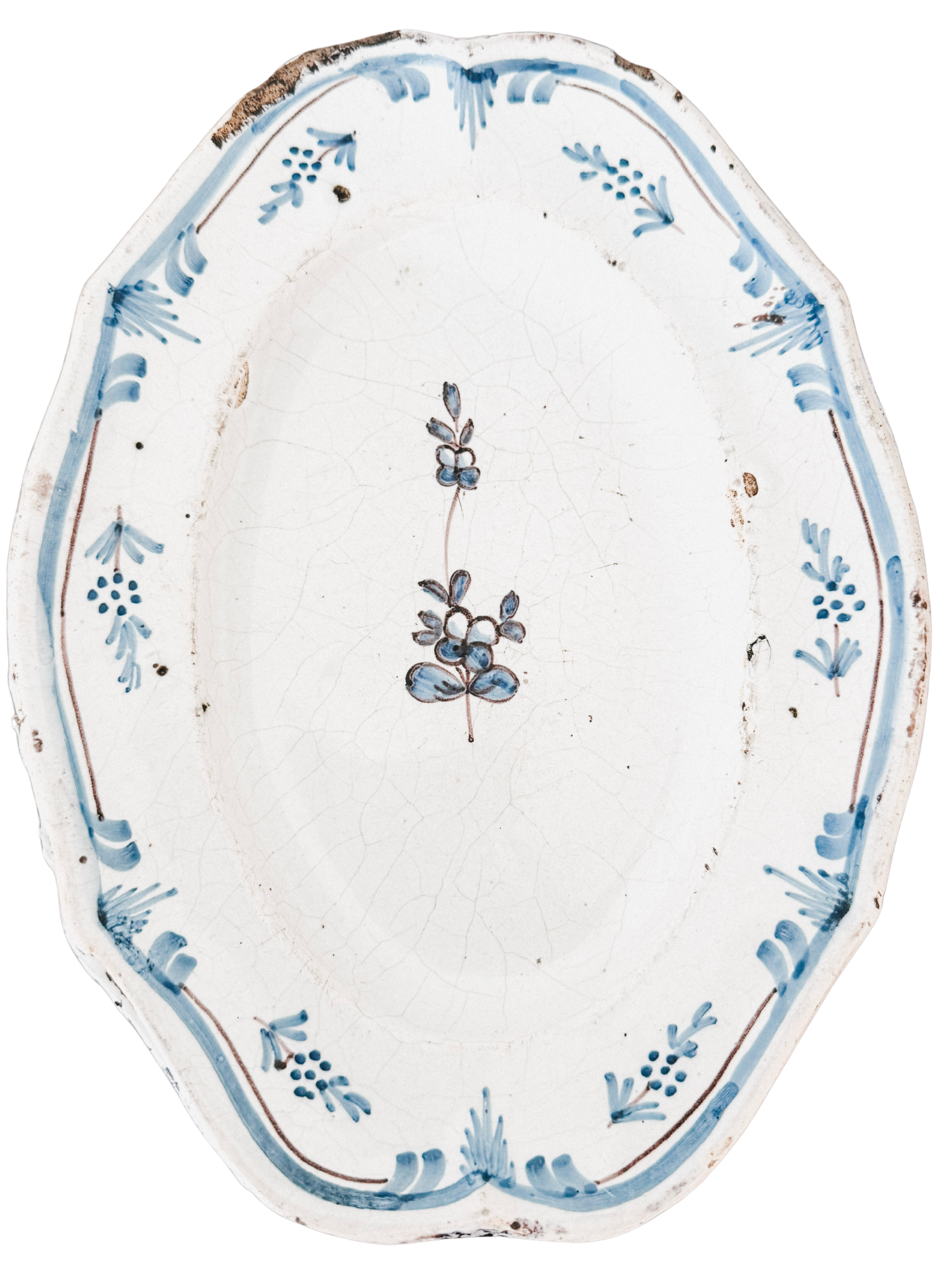 Image 3 of 4
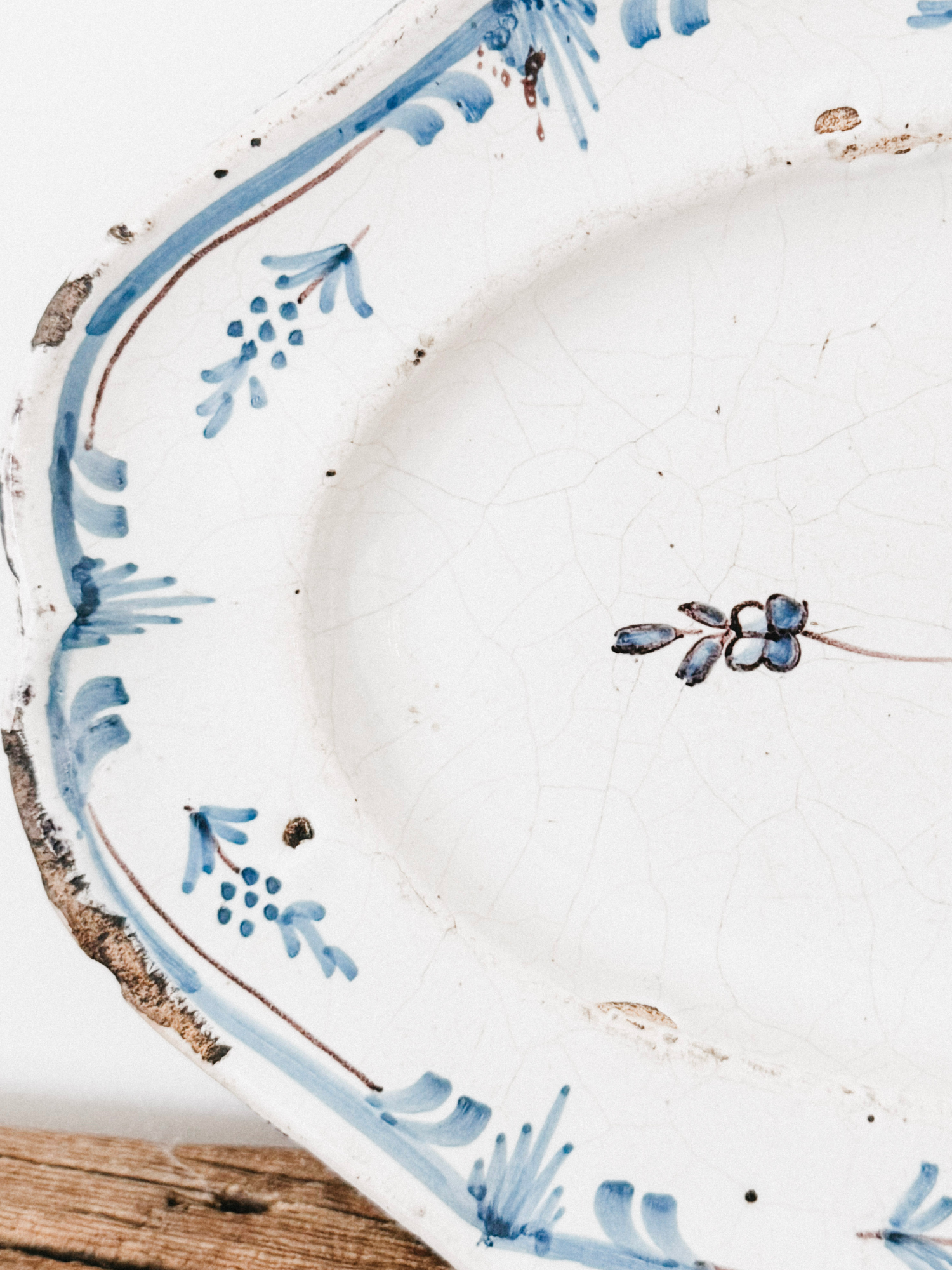 Image 4 of 4